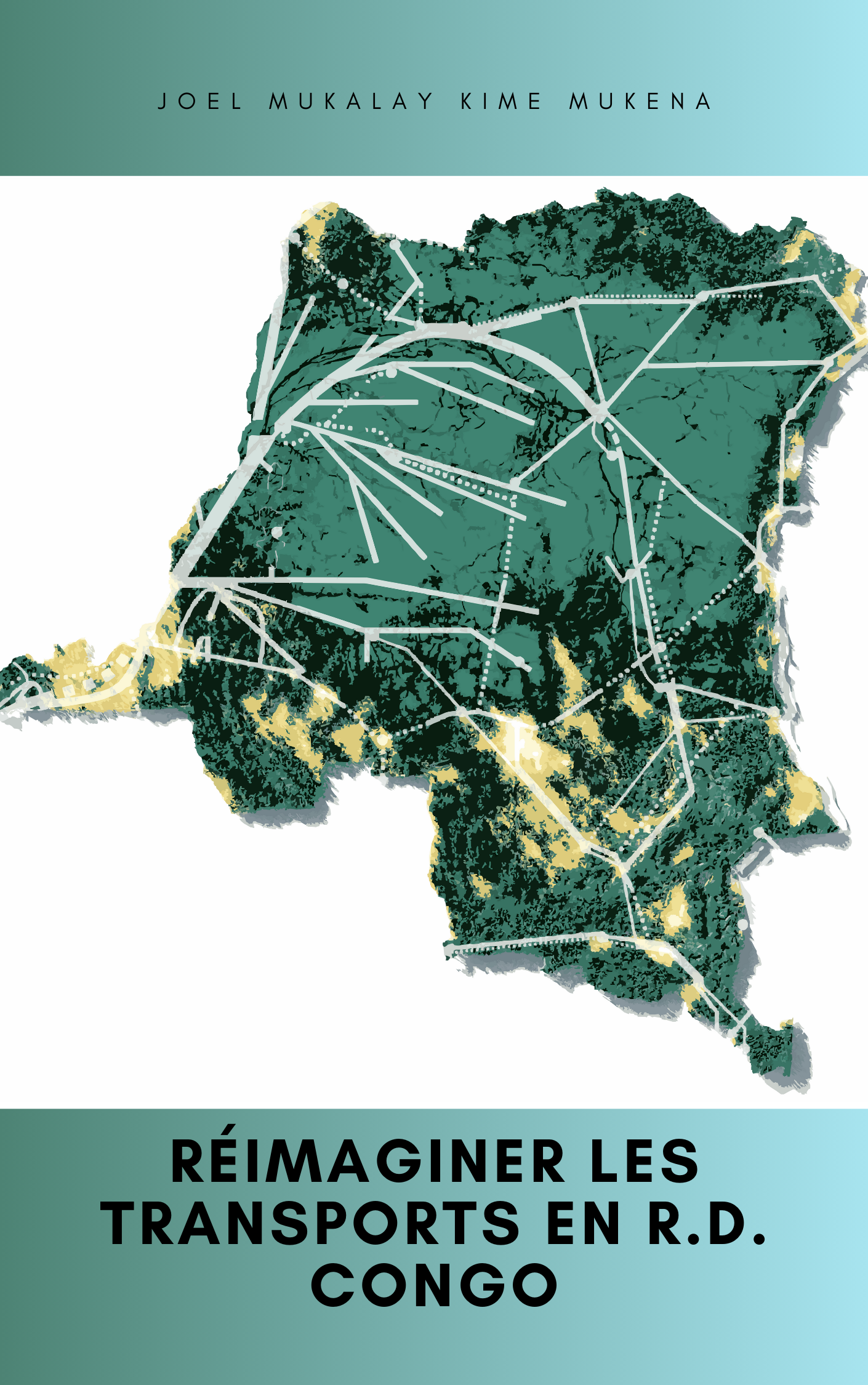
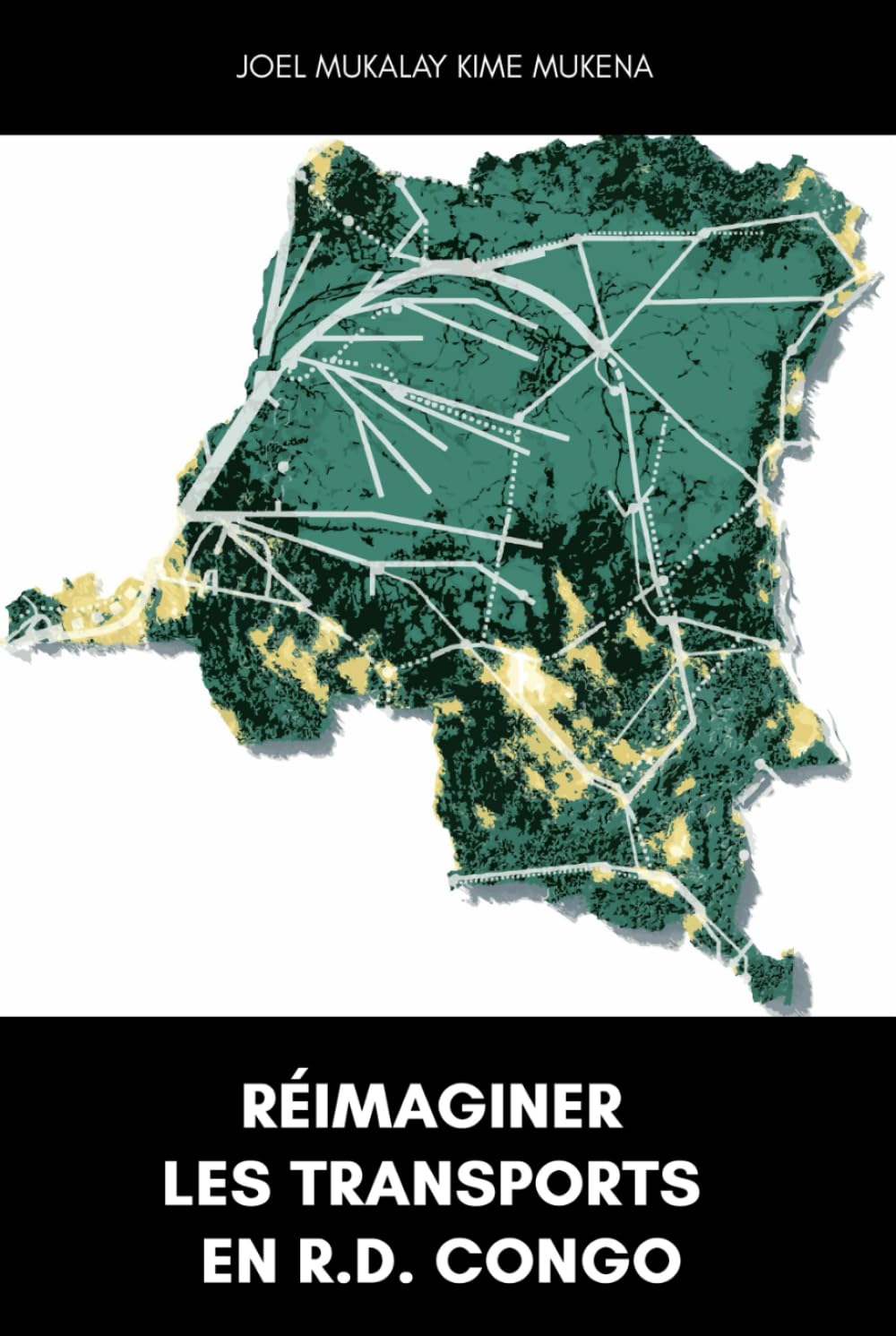
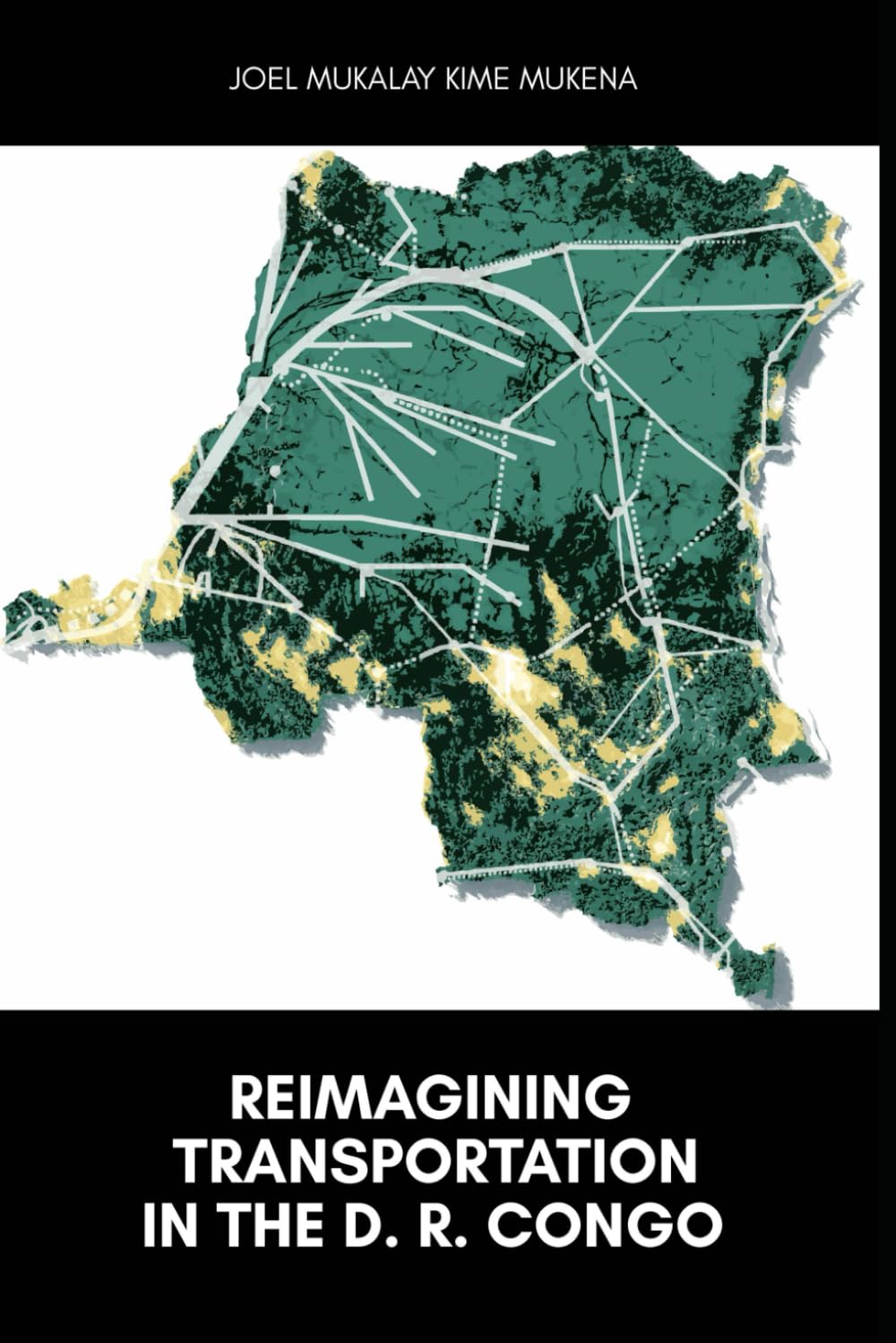
A groundbreaking exploration of transportation infrastructure in the Democratic Republic of Congo, dismantling colonial funnel networks and proposing sustainable, data-driven pathways for national integration.
Across Africa, millions of people remain isolated—not due to lack of local ambition, but because of missing roads, abandoned railway links, and crumbling river crossings. What presents itself as a local transport bottleneck is, at its root, a structural failure of spatial justice.
Joel Mukalay argues that the Congo's infrastructure crisis is not merely an engineering issue; it is a crisis of imagination and national self-worth. This monograph dissects how the colonial transportation networks were funnels constructed exclusively to ship resources out, leaving communities completely disconnected from one another.
Blending quantitative modeling, geospatial mapping, and human narratives, Reimagining Transportation in the D.R. Congo offers a visionary yet pragmatic roadmap for policymakers, engineers, and development leaders to rebuild mobility networks from the ground up.
Comprehensive research monograph on policy, geology, and transit network analysis.
Detailed pathways integrating highway grids, Congo river networks, and railways.
Actionable spatial models focusing on regional integration and local dignity.
Understanding how historical extraction pathways continue to disconnect interior communities today.
Leveraging traffic datasets and geographic models to prioritize internal national integration.
Investigating how physical travel constraints shape dignity and self-determination.
Designing modern highway and river corridor loops linking Kinshasa, Lubumbashi, and Kisangani.
Delineating accessibility to transit infrastructure as a fundamental human right for local development.
Pragmatic financing models, policy targets, and operational plans for regional governments.
Select a transportation route below to analyze the real-world travel time, crop wastage, and economic toll under the current infrastructure system in the D.R. Congo.
Spread awareness about infrastructure inequality on social media:
Book Preview — Sample Chapters
"This book goes far beyond theory. It maps the link between mobility, governance, and dignity in a way that is highly practical. It is required reading for anyone serious about regional African development."
"An unflinching deconstruction of extractive logistics. The author doesn't just critique inherited systems; he supplies concrete blueprints for regional corridor loops."
"One of the rare studies that integrates geographic information system modeling with a profound respect for human dignity. A tour de force of infrastructure writing."

It exposes how inherited roads and railways remain funnel networks designed to move minerals outwards rather than connect interior urban centers, charting a decolonial infrastructure paradigm.
It grounds transit solutions in thorough geospatial analysis, traffic data tracking, and multimodal mapping tailored for local regional planning bureaus.
It links economic access and personal mobility directly to human self-worth, making spatial justice a primary design parameter for development economists.
Joel Mukalay’s monograph is structured specifically to support research, policy dialogues, and university courses in development studies, African economics, and spatial planning.
Ideal for courses analyzing the structural inheritance of extractive transportation networks in the Global South (Chapter 4).
Examines the link between physical mobility, citizen dignity, and political agency (Chapter 6 & 13).
Offers case studies on municipal road maintenance models and diaspora investment trust bonds (Chapter 8 & 12).
Download a 20-page summarized preview including the preface, introduction, and Chapter 1 (historical statistics & behavioral paralysis).
Or contact directly: joelmukalay@gmail.com
University professors, researchers, library directors, and NGO representatives may request a complimentary digital review copy for curriculum evaluation or institutional audits.
Or contact directly: joelmukalay@gmail.com
Acquiring physical books through Amazon can be challenging across the DRC and wider sub-Saharan Africa due to shipping rates or payment limits. To ensure this research reaches students, planners, and policy advocates locally, we offer direct digital licensing and local ordering pathways.
For readers in the DRC and neighboring countries, mobile money payments are fully accepted for the digital edition license:
We are coordinating local printing hubs in major African urban locations for print-on-demand copies:
Special options exist for university libraries, regional think-tanks, government ministries, and NGOs:
Or contact directly: joelmukalay@gmail.com
A comprehensive 500-page monograph for urban developers, policy analysts, transport economists, and development advocates seeking a physical addition to their research library.
 Channel
 Facebook